What did Christopher Wren slate plaque do at Hatton Garden?

The Story
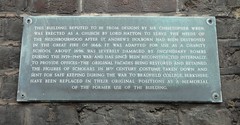
# Hatton Garden: Wren's Gift to a Grieving Parish Standing on Hatton Garden, you're witnessing one of Christopher Wren's most intimate architectural responses to the Great Fire's devastation—a church commissioned by the philanthropic Lord Hatton to rebuild spiritual life in a neighbourhood left reeling after St. Andrew's Holborn went up in flames in 1666. Though Wren's surviving records don't exhaustively document every church he touched in this feverish period of reconstruction, the design of this building bears the hallmarks of his elegant restraint and practical genius, a modest chapel that prioritised accessibility over grandeur for ordinary parishioners rather than the wealthy elite. Within decades, the building's purpose quietly shifted from sanctuary to schoolroom around 1696, its pews replaced by desks where working-class children learned to read and write—a transformation that speaks to Wren's broader legacy of structures that served London's real needs rather than merely its vanity. Though the Blitz nearly erased it from history and modern office walls now enclose what were once prayer halls, the careful restoration of those 18th-century stone scholars watching over the street keeps alive the memory of this place as an instrument of care, a building where Wren's architecture genuinely touched the lives of ordinary Londoners.
Location
Hatton Garden, Holborn
Discover more stories across London