What did Robert Brown Joseph Banks do at 32 Soho Square?

The Story
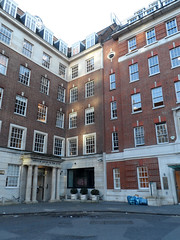
# 32 Soho Square Standing at 32 Soho Square, you're looking at the epicenter of British botanical science during the early nineteenth century, where Sir Joseph Banks—the renowned naturalist who sailed with Captain Cook and transformed the Royal Society into a powerhouse of scientific inquiry—provided the intellectual anchor for a remarkable household of researchers. After Banks's death in 1820, the Linnean Society inherited not just his vast herbarium and scientific legacy, but this very address itself, which became their home from 1821 to 1857, a vibrant hub where Robert Brown (who revolutionized understanding of plant reproduction and gave his name to "Brownian motion") and the younger David Don (a gifted botanist and librarian) worked, debated, and shaped the future of plant science. Within these walls, the society's members examined, catalogued, and discussed countless specimens, hosted luminaries of the scientific world, and established standards for botanical nomenclature that would influence naturalists across the globe. This Soho Square townhouse was far more than just an address; it was the beating heart of a scientific movement that proved London could rival any European city as a center for botanical excellence, making it a pilgrimage site for anyone seeking to understand how modern plant science took root in the very heart of Westminster.
Location
32 Soho Square, Westminster, W1
Discover more stories across London