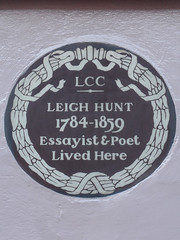
What did Leigh Hunt brown plaque do at 22 Upper Cheyne Row?

The Story
# Upper Cheyne Row Standing before 22 Upper Cheyne Row, you're at the threshold of Leigh Hunt's domestic sanctuary during some of his most creatively fertile years in the 1840s and 1850s, when this Chelsea address became a gathering place for the literary luminaries of Victorian London. Within these walls, Hunt—already in his sixties but undimmed in spirit—continued his prolific work as an essayist and poet, producing reflective pieces that captured the wisdom of a man who had spent a lifetime championing imagination and social reform. The house itself witnessed the final chapters of his remarkable career, a period when his earlier radicalism had mellowed into philosophical essays about beauty, friendship, and the pleasures of domestic life, many of which found their way into print from his study here. For Hunt, Upper Cheyne Row represented not just a home but a hard-won refuge—a place where he could finally enjoy stability after decades of financial struggle, imprisonment for his political beliefs, and restless moves across London—making this modest townhouse the symbolic anchor of an extraordinary life devoted to literature and principle.
Location
22 Upper Cheyne Row, Kensington and Chelsea, SW3
Discover more stories across London