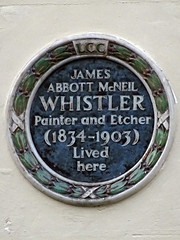
What did James Abbott McNeill Whistler blue plaque do at 96 Cheyne Walk?
The Story
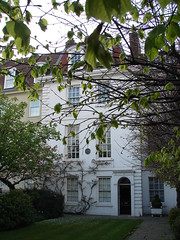
# 96 Cheyne Walk Standing before this Chelsea townhouse, you're gazing at one of the most creatively turbulent addresses in Victorian London, where the American painter and printmaker James Abbott McNeill Whistler established his studio and home during the 1860s and early 1870s—a period that produced some of his most celebrated nocturnes and etchings of the Thames. It was here, in this very building overlooking the river, that Whistler developed his revolutionary philosophy of "art for art's sake," creating atmospheric paintings that prioritized mood and color harmony over literal representation, work that would fundamentally challenge Victorian artistic conventions. The studio became a gathering place for the avant-garde, where Whistler's sharp wit and uncompromising artistic vision attracted fellow artists and intellectuals, though his combative nature and financial troubles meant his tenure at Cheyne Walk was often contentious. Though Whistler's time here ended in financial ruin and legal disputes, the legacy of paintings and prints created within these walls secured his place as a visionary who transformed how artists approached landscape and urban subjects, making this address a pivotal landmark in the story of modern art's emergence in London.
Location
96 Cheyne Walk, Kensington and Chelsea, SW10
Discover more stories across London