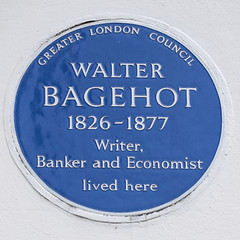
What did Walter Bagehot blue plaque do at 12 Upper Belgrave Street?
The Story
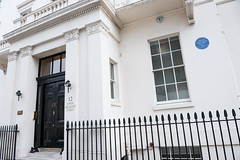
# 12 Upper Belgrave Street Standing before this elegant Belgravian townhouse, you're gazing at the intellectual epicenter where Walter Bagehot synthesized the three great pillars of his life—finance, politics, and prose—during the most productive decades of the nineteenth century. It was within these walls that the editor of *The Economist* refined his penetrating observations about constitutional monarchy and parliamentary democracy, drawing upon the very proximity of Westminster's power to craft works like *The English Constitution* that would reshape how the world understood British governance. Here, between banking consultations and editorial deadlines, Bagehot entertained the era's most formidable minds, his drawing rooms becoming a salon where economic theory, political philosophy, and literary wit collided and catalyzed new ideas. This address mattered not as a refuge from the world of affairs, but as the command center from which Bagehot demonstrated that rigorous financial thinking and elegant writing were not incompatible pursuits—a lesson still echoed in his enduring influence on economics and political thought.
Location
12 Upper Belgrave Street, Westminster, SW1
Discover more stories across London