What did Thomas Carlyle brown plaque do at 33 Ampton Street?

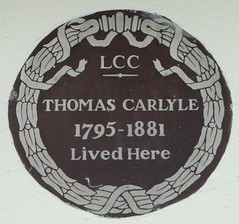
The Story
# 33 Ampton Street, Camden Standing before this modest townhouse in Camden, you're looking at the crucible where Thomas Carlyle transformed from a struggling Scottish writer into one of Victorian England's most formidable intellectual voices. During his years at 33 Ampton Street in the 1830s, this unassuming address became the workshop where Carlyle penned some of his most influential works, including portions of his monumental history *The French Revolution*, while his wife Jane Welsh Carlyle—herself a brilliant correspondent and thinker—maintained the household and engaged in the vibrant literary discussions that made their home a gathering place for London's intelligentsia. The creative ferment contained within these walls was remarkable: here Carlyle developed his distinctive philosophical voice, that thunderous, aphoristic style that would captivate readers and infuriate critics in equal measure, as he grappled with questions of history, heroism, and social reform that would define the Victorian age. Though Carlyle would later move to Chelsea and find greater fame and comfort, it was in this Camden dwelling that he proved himself capable of the sustained intellectual labor and original thought that his ambitions demanded—making this address not merely a home, but the birthplace of a legacy that would shape how generations understood the very nature of history and human greatness.
Location
33 Ampton Street, Camden, WC1
Discover more stories across London