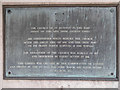
What did Christopher Wren grey plaque do at St Dunstan in the East?
The Story
# St Dunstan in the East Standing in this tranquil garden tucked away from the City's modern rush, you're gazing upon one of Christopher Wren's earliest triumphs in the aftermath of London's greatest catastrophe—the Great Fire of 1666 that consumed the medieval St Dunstan in the East and much of the capital. In the years immediately following the fire, Wren seized the opportunity to rebuild this ancient parish church, channeling his revolutionary architectural vision into a design that would have transformed the entire structure, though only the graceful tower he conceived survives to this day as testament to his ambition. This commission came at a pivotal moment in Wren's career, when he was establishing himself as the visionary architect who would reshape London's skyline, and St Dunstan represented his chance to prove that from the ashes of disaster could rise buildings of lasting beauty and geometric elegance. Though enemy bombs in 1941 would destroy the rest of his work here, reducing his church to ruins before the Corporation of London transformed the site into this serene garden in 1971, the tower still stands as a solitary monument to Wren's determination to rebuild a city—a physical reminder that even partial survival can preserve an architect's enduring legacy.
Location
St Dunstan in the East
Discover more stories across London