What did London bronze plaque Pontefract Castle do at 73 Wigmore St?
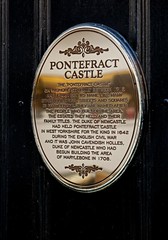
The Story
# Pontefract Castle, 73 Wigmore Street Standing before this elegant Marylebone townhouse, you're witnessing a landscape quite literally shaped by ambition and aristocratic legacy. Built between 1719 and 1746, this address embodies the vision of John Cavendish Holles, the Duke of Newcastle, who transformed the fields of Marylebone into one of London's most prestigious addresses by naming its streets and squares after the grand estates he and his peers commanded across the realm. The name "Pontefract Castle" wasn't merely decorative nostalgia—it was a deliberate assertion of power, a reminder that the Duke's control of the Yorkshire fortress during the Civil War a century earlier had secured his family's prominence, and now, through careful urban development, he was replicating that dominance in brick and stone in the heart of London. This building, then, stands as a physical monument to how the English aristocracy literally rewrote the map of London to reflect their own histories, turning the Marylebone landscape into a personal geography of family triumphs and territorial claims.
Location
73 Wigmore St
Discover more stories across London