What did Great Exhibition and Crystal Palace black plaque do at Hyde Park?
The Story
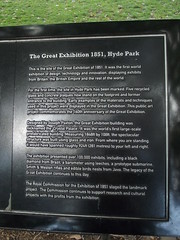
# The Crystal Palace's Footprint: Where Victorian Wonder Was Born Standing on this very stretch of Hyde Park in 1851, you would have witnessed the opening of the world's most audacious architectural experiment—Joseph Paxton's Crystal Palace rising 108 feet into the London sky, its glass and iron frame stretching nearly a quarter-mile across the green space where you now stand. This wasn't merely a building; it was a revolutionary act of engineering that introduced prefabrication and mass production to the world, showcasing over 100,000 wonders from across the globe—from Brazilian black diamonds to working prototypes of submarines—to the six million visitors who passed through its gates that extraordinary year. For those who walked these grounds, the Crystal Palace represented an intoxicating vision of human progress and industrial possibility, a temporary temple to innovation that proved the Victorians' faith in technology and design was not misplaced. Though the building itself was dismantled and relocated to Sydenham in South London, its ghost remains here on this spot, marked now by these recycled glass plaques—a fitting memorial to a place that forever changed how the world thought about exhibitions, manufacturing, and the power of bold architectural vision.
Location
Hyde Park
Discover more stories across London