What did plaque № 40516 do at 111 Cannon Street?
The Story
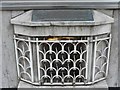
# The Stone at the Heart of London Standing at 111 Cannon Street, you're touching one of the most mysterious touchstones of London's identity—a fragment of limestone whose true purpose remains tantalizingly unknown, yet whose presence here has anchored the city's sense of itself for over eight centuries. The stone's journey through this very location mirrors London's own transformation: originally fixed in the ground before the modern street was built, it was moved in 1742 to the north side of Cannon Street, then incorporated into the Church of St. Swithun London Stone when that medieval building rose here—a sacred vessel for a sacred mystery. In 1188, a descendant of someone bearing the stone's name, Henry, son of Eylwin de Londenstane, rose to become Lord Mayor, suggesting that even then this limestone fragment held such significance that families built their identities around it. When the church was demolished in 1962 and the stone eventually secured behind this plaque, it didn't lose its power; instead, it gained new meaning—a reminder that in the heart of London's financial district, buried beneath the commerce and steel, lies something older, stranger, and far more important than anyone has ever fully understood.
Location
111 Cannon Street
Discover more stories across London