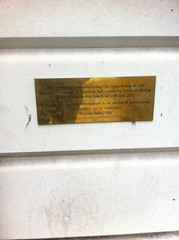
What did Wat Tyler brass plaque do at Smithfield?
The Story
# Smithfield: Where Wat Tyler's Rebellion Met Its End Standing at Smithfield in the summer of 1381, you would have witnessed the violent climax of the Great Rising—the moment when the 14-year-old King Richard II's guards struck down Wat Tyler, the charismatic rebel leader, in front of thousands of his followers who had marched on London demanding an end to serfdom and punitive taxation. Tyler had led over 100,000 peasants through the capital's streets just days before, and it was here, in this open market ground, that his revolution was brutally extinguished, his body dragged through the streets and his head mounted on London Bridge as a warning to future rebels. Though Tyler himself fell at Smithfield, his legacy of resistance lived on—nearly four centuries later, Thomas Paine would invoke his memory as a counterweight to the glorification of the barons at Runnymede, recognizing in this exact location the birthplace of a different kind of English liberty, one born not from nobility but from the courage of common people. Today, the brass plaque marks not just a death, but a turning point: the moment when the voiceless claimed their voice, and when Smithfield became hallowed ground for every subsequent movement for justice and equality.
Location
Smithfield
Discover more stories across London