What did Robert Owen blue plaque do at 4 Burton Place?
.jpg?width=250)
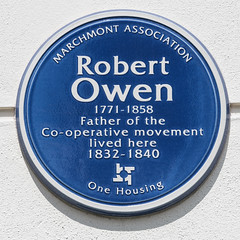
The Story
# Robert Owen at 4 Burton Place During his eight years at 4 Burton Place, from 1832 to 1840, Robert Owen transformed this modest London townhouse into the intellectual headquarters of the co-operative movement, a space where radical ideas about workers' rights and communal ownership took tangible shape during Britain's most turbulent industrial decade. It was here, amid the city's growing industrial unrest and the aftermath of failed Owenite communities, that he refined his vision for co-operation, hosting gatherings of like-minded reformers and drafting the principles that would eventually reshape how ordinary people could own and control businesses together. The residence became a sanctuary of progressive thought at a time when Owen was simultaneously ridiculed by industrialists and abandoned by many early supporters, yet he persisted in writing, corresponding, and strategizing from these rooms—determined to prove that workers need not be mere cogs in the machine of capitalism. By the time he left Burton Place in 1840, the seeds he had nurtured there would flourish into the cooperative stores, mutual aid societies, and worker-owned enterprises that spread across Britain, making this quiet Georgian address a birthplace of a movement that would eventually transform commerce and give ordinary people genuine economic power.
Location
4 Burton Place
Discover more stories across London