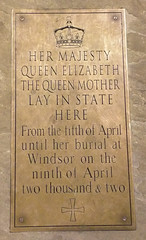
What did Elizabeth Bowes-Lyon bronze plaque do at Westminster Hall?
The Story
# Westminster Hall Standing beneath the soaring medieval arches of Westminster Hall in April 2002, tens of thousands of mourners filed past the catafalque where Elizabeth, the Queen Mother, lay in state for four extraordinary days—a final tribute to a woman who had become the emotional heart of Britain through the twentieth century's darkest hours. This wasn't merely ceremonial pageantry; the very choice of Westminster Hall, the oldest surviving part of the Palace of Westminster and the site where monarchs and statesmen have lain in state for centuries, reflected the nation's recognition that Elizabeth Bowes-Lyon had transcended the role of consort to become a living symbol of resilience and national identity. From April 5th until her burial at Windsor on the 9th, the Queen Mother's four-day vigil here drew an unprecedented crowd—over a million people queued through the night in the cold spring rain, many standing for hours simply to file past in silence, their presence transforming Westminster Hall into an cathedral of collective grief and gratitude. This location mattered not because she had created something tangible here, but because the nation chose it as the stage for its final farewell to a woman who had steadied the Crown through abdication, war, and loss—making Westminster Hall, for those four days, the sacred center of British mourning.
Location
Westminster Hall
Discover more stories across London