What did Bronze plaque № 42558 do at Westminster Hall?
The Story
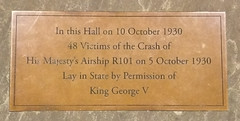
# Westminster Hall and the R101 Memorial Standing in the vast medieval expanse of Westminster Hall on October 10, 1930, one would have witnessed an extraordinary scene of national mourning—48 victims of the R101 airship disaster lay in state within these ancient walls, their coffins arranged solemnly beneath the soaring timber roof that had watched over nearly seven centuries of British history. The catastrophic crash two days earlier, in which the pride of the British airship program plummeted to earth near Beauvais, France, sent shockwaves through the nation and demanded a resting place befitting such a tragedy; Westminster Hall was chosen as the only venue grand enough and sufficiently hallowed to honor so many fallen at once. This specific location mattered profoundly because it transformed the Hall from a symbol of political power into a temple of collective grief, where tens of thousands of ordinary Londoners filed past to pay their respects to crew members and passengers they would never meet—a poignant reminder that Westminster Hall belonged not just to Parliament, but to the people of Britain itself. By hosting this lying-in-state, the Hall enshrined the R101 disaster in the very fabric of national memory, making it impossible to walk through these doors without remembering that on this date, Britain paused to honor those lost in humanity's ambitious but ultimately tragic reach toward the skies.
Location
Westminster Hall
Discover more stories across London