What did Edward Meryon green plaque do at 17 Clarges Street?

The Story
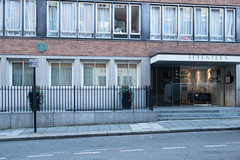
# Edward Meryon at 17 Clarges Street For thirty-four years, from 1846 until his death in 1880, Edward Meryon made this elegant Mayfair townhouse his home and medical sanctuary, transforming a private residence into a place where groundbreaking medical observation took place. It was within these walls, surrounded by the wealthy patients who could afford to consult a respected Royal College physician in one of London's most fashionable addresses, that Meryon encountered and meticulously documented the cases of muscular dystrophy that would define his medical legacy—conditions that had puzzled the medical establishment but which he recognized as a distinct disease requiring urgent understanding. The location itself was instrumental to his work; situated in the heart of Westminster's medical elite, Meryon could attract and observe affluent families whose children displayed the progressive muscle weakness he was determined to classify and describe. Standing before this building today, one recognizes that Meryon's revolutionary insight into muscular dystrophy emerged not from a laboratory or teaching hospital, but from the intimate clinical encounters conducted within this very townhouse, making 17 Clarges Street the birthplace of modern understanding of a disease that would bear his name in medical history.
Location
17 Clarges Street, Westminster
Discover more stories across London