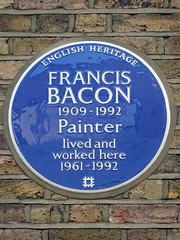
What did Francis Bacon blue plaque do at 7 Reece Mews?

The Story
# Francis Bacon at 7 Reece Mews Standing before this modest Victorian mews house in South Kensington, you're gazing at the studio where Francis Bacon spent the final three decades of his life, transforming a cramped 20-by-21-foot space into one of the twentieth century's most productive artistic laboratories. From 1961 until his death in 1992, Bacon's chaotic studio—cluttered with paint-splattered furniture, photographs, and art books—became the birthplace of his most iconic works, including the screaming popes and contorted figures that would define his legacy. The artist famously worked in controlled mayhem here, often painting while music blared and friends visited, channeling the psychological intensity of his vision through layers of gestural marks and figurative distortion onto canvas after canvas. This ordinary-looking mews house mattered profoundly not just because Bacon worked within its walls, but because the very confinement and intimacy of the space seemed to intensify his visual assault on the human form—making 7 Reece Mews the unlikely epicenter from which one of modern art's most unsettling and brilliant voices emerged to shake the world.
Location
7 Reece Mews, South Kensington
Discover more stories across London