What did Burtt & Sons blue plaque do at Albany Road?

The Story
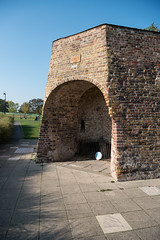
# Albany Road, London Standing before the Lime Kiln on Albany Road, you're witnessing the industrial beating heart of Burtt & Sons's enterprise—a place where two seemingly ordinary materials, coal and limestone, were transformed into the very substance that literally held Victorian London together. For the builders' suppliers, this wasn't merely a workshop but a crucial production hub established in 1816, where three-day burning cycles turned raw canal-delivered materials into quicklime, the essential binder that mortar required for the city's rapidly expanding Georgian and Victorian terraces. Beyond its role in construction, this kiln became part of London's cultural transformation when its luminous byproduct, limelight, began illuminating theatres across the city—meaning that while families lived in homes built with Burtt & Sons's mortar, audiences gasped in wonder under their theatrical light. This Grade II listed building survives today as a tangible reminder that the Burtt family's legacy wasn't built on grand gestures, but on understanding that behind every street corner and every stage, there are essential craftspeople who made London's expansion—and its dreams—possible.
Location
Albany Road
Discover more stories across London