What did Sir Robert Hunter blue plaque do at Addington Square?

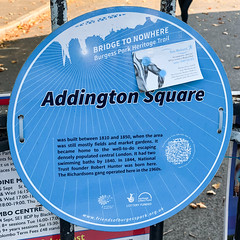
The Story
# Sir Robert Hunter and Addington Square Born into a Camberwell household in 1844, young Robert Hunter arrived at Addington Square during a peculiar moment in London's transformation—when the area still retained its rural character despite being swallowed by the expanding city, its market gardens and swimming baths offering a respite that would have shaped his understanding of public space and accessibility. Growing up in this newly genteel neighbourhood, surrounded by the comfortable middle-class homes that had drawn families fleeing the chaos of central London, Hunter would have witnessed firsthand how green spaces and thoughtful urban planning could enhance ordinary lives and create community. It was in these formative years on Addington Square, breathing the relatively clean air of what was still a semi-rural escape, that the seeds were sown for his revolutionary vision—one that would eventually lead him to co-found the National Trust, an organization dedicated to preserving not grand estates alone, but the commons and accessible spaces that ordinary people desperately needed. Standing here now, looking up at this blue plaque, you're standing at the birthplace not just of a man, but of an idea: that the beauty and tranquility of places like Addington Square should belong to everyone, preserved for future generations who would never know its quiet fields.
Location
Addington Square, Brugess Park
Discover more stories across London