What did Charles Robert Cockerell blue plaque do at 13 Chester Terrace?
.jpg?width=250)
The Story
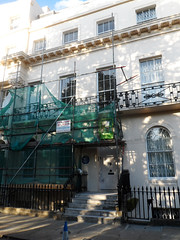
# 13 Chester Terrace, Camden Standing before this elegant Regency townhouse on Chester Terrace, you're looking at the final chapter of one of Britain's most influential architects' life—the place where Charles Robert Cockerell spent his last years and where he ultimately died in 1863 at the age of seventy-five. After a career that had taken him across Europe studying classical antiquities and designing some of the nation's most significant buildings, Cockerell retreated to this comfortable Camden address to reflect on his legacy and continue his scholarly work as a dedicated antiquary. It was here, surrounded by his collections and architectural drawings, that the aging master refined his theories on classical design, mentoring younger architects and contributing to the Royal Academy, even as his health declined. The plaque marks not just a residence, but a sanctuary where one of the nineteenth century's greatest architectural minds—a man who had restored the Ashmolean Museum, designed the Fitzwilliam Museum, and bridged the worlds of practical architecture and classical scholarship—completed his life's work in the quiet comfort of a London townhouse.
Location
13 Chester Terrace, Camden, NW1
Discover more stories across London