What did The Steelyard black plaque do at Hanseatic Walk?
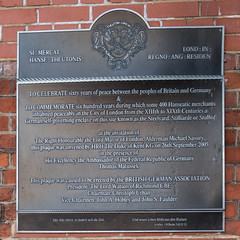
The Story
# The Steelyard Black Plaque Story Standing on Hanseatic Walk, you're positioned at the heart of a remarkable medieval trading post where German merchants created one of London's most autonomous foreign communities—a self-governing enclave that thrived for six centuries while maintaining an almost miraculous peace with their English neighbors. It was here, among the timber-framed warehouses and bustling wharves along the Thames, that Hanseatic traders from the Baltic and North Sea ports established their monopoly on cloth, timber, and grain, their Steelyard becoming as essential to London's prosperity as it was distinct in its German character and governance. For four hundred years—from the 1300s until the late 1800s—this precise location witnessed the daily operations of merchants who lived, worked, and died within these walls, conducting business in their native tongue and maintaining their own courts, scales, and trading standards that made the Steelyard a city within the City. The plaque's emphasis on "sixty years of peace between the peoples" speaks not just to political harmony, but to the remarkable achievement of this very spot: a place where difference was accommodated rather than erased, where foreign merchants built lives and legacies on English soil, leaving behind one of London's most overlooked testaments to medieval cosmopolitanism.
Location
Hanseatic Walk
Discover more stories across London