What did Islington green plaque City Pesthouse do at Bath Street?
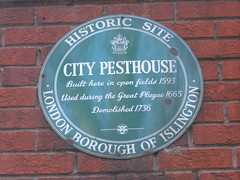
The Story
# City Pesthouse, Bath Street, Islington Standing on Bath Street today, it's hard to imagine the desperate scenes that unfolded on this very ground during the summer of 1665, when the Great Plague swept through London and the City authorities established this pesthouse in the open fields beyond the city limits—a place of last resort for the afflicted poor who had nowhere else to turn. Built in 1593 in the rural expanse north of Islington, this isolated location was deliberately chosen for its distance from the densely packed streets of the City, where plague victims numbered in the thousands and the living could barely manage the disposal of the dead. Those quarantined here endured a grim fate: crammed into hastily constructed buildings with minimal medical care, separated from their families, and marked by the community as carriers of contagion, yet this pesthouse also represented one of the earliest attempts by civic authorities to implement disease control through isolation rather than abandonment. By the time it was finally demolished in 1736, after seventy years of serving as a sobering reminder of plague, the pesthouse on Bath Street had become an accidental monument to both the city's darkest hour and its fumbling first steps toward public health—a forgotten facility where thousands suffered and died, yet which helped transform how London would face future epidemics.
Location
Bath Street, Islington
Discover more stories across London