What did Henry VI and London Stone black plaque do at 111 Cannon Street?
The Story
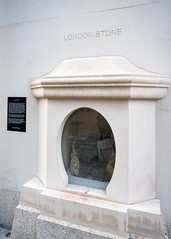
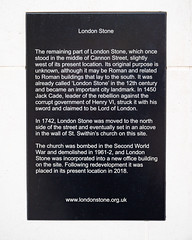
# Henry VI and London Stone: 111 Cannon Street Standing here at 111 Cannon Street, you're at the very epicenter of a dramatic moment that shook medieval London to its core—in 1450, Jack Cade, leader of a fierce rebellion against the corrupt government of the young King Henry VI, struck London Stone with his sword at this exact spot and declared himself Lord of London, transforming the ancient monument into a symbol of popular uprising against royal misrule. Though Henry VI himself never stood on this ground, his reign's instability and failures reverberated through the streets of the City, and this singular act of rebellion—witnessed by Londoners who gathered around this ancient stone—became the most potent gesture of defiance against his weak and disastrous rule. The stone, already venerable and mysterious even then, suddenly became charged with revolutionary meaning; by striking it, Cade wasn't just making a political statement, but was claiming the very heart and authority of London itself, wresting symbolic power from a distant, ineffectual king. Today, as you look at London Stone in its modern alcove, you're looking at a silent witness to the moment when London's common people rose up and declared that even sacred landmarks could be seized by those bold enough to challenge the throne.
Location
111 Cannon Street
Discover more stories across London