What did flying bomb (V1/V2) and Blackfriars railway station blue plaque do at Blackfriars Road?
The Story
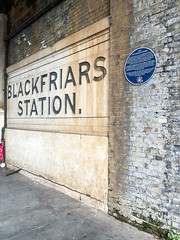
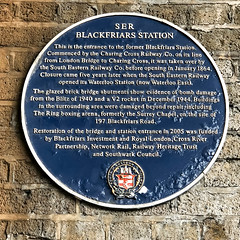
# Blackfriars Station and the Flying Bombs Standing at this corner of Blackfriars Road, you're looking at a building that survived two of London's most devastating aerial assaults, its very brickwork bearing witness to the catastrophic night of December 16, 1944, when a V2 rocket tore through this neighborhood with terrifying force. The glazed brick bridge abutments visible above still show the scars of both the relentless Blitz bombardment of 1940 and that later rocket attack—injuries that would have been fatal to most structures, yet this Victorian railway infrastructure endured. Around this station, the devastation was nearly total; The Ring boxing arena and countless surrounding buildings were obliterated beyond any possibility of repair, yet Blackfriars Station itself remained standing as a silent monument to Victorian engineering and unexpected resilience. What makes this spot truly poignant is that this modest entrance represents not just a building that survived, but a crucial piece of Victorian London's transport network—opened in 1864 with great promise—that managed to outlast the bombs meant to destroy British infrastructure and morale, becoming one of the few structures in this ravaged area that could continue serving its community in the years after the war ended.
Location
Blackfriars Road
Discover more stories across London