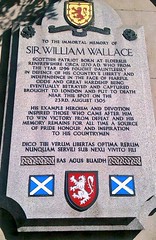
What did William Wallace stone plaque do at Smithfield?

The Story
# William Wallace at Smithfield Standing at Smithfield on a grey London afternoon, you're standing at the precise spot where Scotland's greatest patriot met his brutal end on the 23rd of August, 1305. After nearly a decade of fierce resistance against Edward I's occupation—from his victory at Stirling Bridge to his capture and betrayal—Wallace was brought to this very location to face the English king's justice, a death deliberately chosen for its public spectacle and calculated cruelty. What makes Smithfield particularly significant is that it was London's most notorious execution ground, a place of maximum humiliation where the English crown displayed the bodies of traitors and rebels as warnings to the masses; by executing Wallace here, Edward I sought not merely to kill a man, but to crush the symbol of Scottish resistance on English soil. Yet the strategy backfired entirely—Wallace's martyrdom at Smithfield transformed him into an immortal legend, and standing here centuries later, reading the inscription's defiant Latin motto and Gaelic words, you realize that this brutal act of suppression became instead the crucible that forged Scottish national identity, making this grim stone marker in the heart of London a pilgrimage site for those who understand that sometimes the most powerful victories come through defeat.
Location
Smithfield
Discover more stories across London