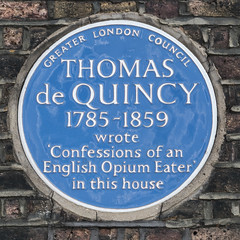
What did Thomas De Quincey blue plaque do at 36 Tavistock Street?
The Story
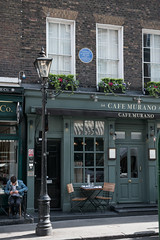
# 36 Tavistock Street At this very address in Covent Garden, Thomas De Quincey found refuge and purpose during the prolific years of his life, transforming a modest townhouse into the birthplace of one of English literature's most extraordinary confessional works. It was within these walls that he committed to paper the haunting narrative of "Confessions of an English Opium Eater," a groundbreaking memoir that would become the template for all personal addiction literature to follow, blending philosophical reflection with raw psychological vulnerability. The work, first serialized in the London Magazine in 1821 and later published as a complete book, emerged from De Quincey's own decades-long struggle with laudanum—the opium-laced tincture that had enslaved him since youth—making this house not merely a place of writing, but a kind of literary exorcism. Standing before this blue plaque on Tavistock Street, you're facing the location where an entire literary tradition was born: the place where a tormented man transformed his addiction and despair into prose so vivid and psychologically penetrating that it would influence writers and readers for generations to come.
Location
36 Tavistock Street, Westminster, WC2
Discover more stories across London